 CampingSetting up wild camp: 7 principles that leave the place as you found it
Overland travel and 4x4 expeditions
- CampingSetting up wild camp: 7 principles that leave the place as you found it
 TroubleshootingEngine overheating off-road is not the same as overheating on tarmac: 5 field checks that tell you whether you can continue
 SkillsReading an off-road track: 5 visual clues that tell you what lies ahead
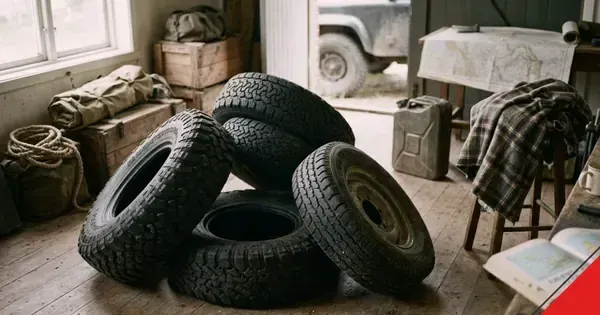 Vehicle SystemsTread patterns and compounds are NOT universal: 4 tyre types and the terrain each one handles best
 KitWhat to pack for remote overland travel is not the same as what to pack for a weekend away
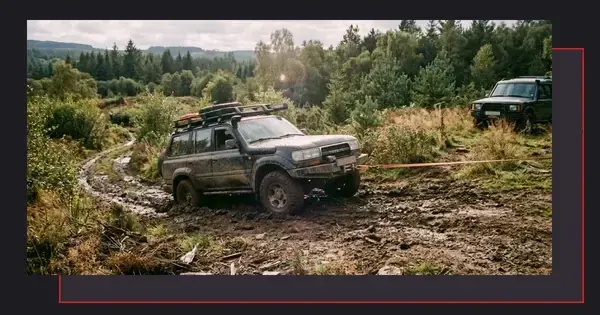 RecoveryRecovery isn't rescue: 6 tools and the order that keeps everyone safe when your 4x4 is stuck
 PlanningPlanning your first overland trip: 6 decisions that shape everything else
 Vehicle SystemsWhat a differential lock is NOT: the single most misunderstood control in your 4x4
Overland travel is not a safari holiday or a guided tour. It's self-reliant travel across challenging terrain, often far from paved roads, where the journey itself shapes the experience. For drivers in the UK planning trips across Scotland's Highlands, mid-Wales forestry tracks or international routes through the Atlas Mountains or Central Asia, the difference between a successful expedition and a breakdown comes down to preparation, equipment and understanding what the vehicle and driver can handle.
Route planning and terrain assessment
A route on paper rarely matches what you find on the ground. Tracks marked on a map may have washed out, river crossings can deepen after rain, and a promising shortcut may end at a locked gate. Before committing to a route, gather recent trip reports from other drivers, check satellite imagery for track condition and identify bail-out points where you can rejoin tarmac if the route proves impassable.
Terrain dictates vehicle choice and modifications. Sand requires low tyre pressure and momentum; mud demands tread pattern and weight distribution; rock crawling needs ground clearance and precise throttle control. A route that mixes all three in one day will test every system on the vehicle.
Water crossings and depth assessment
Wading depth is not the height of the air intake. Water enters door seals, rises through the transmission tunnel and floods the cabin long before the engine drowns. Walk the crossing first to check the bottom for hidden rocks and deep channels. Mark the deepest point with a stick. If the water reaches mid-door height on your vehicle, consider an alternative route.
Vehicle preparation and mechanical resilience
An overland vehicle is not a standard 4x4 with a roof rack. It's a platform built for extended self-sufficiency, where every component has been chosen because it will not fail when you are three days from the nearest mechanic. Service intervals shorten when you are driving through dust, fording rivers and idling for hours to charge batteries. Oil, filters and brake fluid degrade faster under expedition conditions than they do on a motorway.
Weight is the hidden enemy. Every jerry can, every spare part, every piece of recovery kit adds load to the suspension, increases braking distance and reduces the margin before you break a spring or shear a shock mount. Weigh the loaded vehicle before departure and compare it to the gross vehicle weight rating. If you are over, something comes off.
| System | Modification purpose | Consequence of failure |
|---|---|---|
| Suspension | Carry load without bottoming out | Broken springs, damaged chassis mounts |
| Protection plates | Shield sump, transfer box, fuel tank | Punctured sump, immobilised vehicle |
| Recovery points | Anchor winch or kinetic rope safely | Torn bodywork, ineffective recovery |
| Tyres | Grip, puncture resistance, load rating | Blowout, loss of traction, stuck vehicle |
| Long-range fuel | Extend range between refuelling | Stranded with no fuel source nearby |
Electrical systems and power management
A flat battery in the wilderness is not inconvenient—it's dangerous. Dual-battery systems isolate the starter battery from auxiliary loads such as fridges, lighting and communication equipment. A solar panel or DC-DC charger keeps the auxiliary bank topped up without relying on long engine run times. Fuse every circuit and label every connection so you can diagnose a fault in poor light with wet hands.
Recovery techniques and self-extraction
Getting stuck is not a mistake—it's a statistical certainty on any long expedition. The skill is getting out without damaging the vehicle or injuring anyone nearby. Kinetic ropes store energy during the pull and release it to jerk the stuck vehicle free, but they can snap and recoil with lethal force. A dampener—a heavy blanket or recovery bag draped over the rope—absorbs the energy if the rope or shackle fails.
Sand ladders, high-lift jacks and winches all have their place, but they work only when used correctly. A high-lift jack on soft ground will sink rather than lift. A winch anchored to a tree with no tree protector will cut through bark and fail. Practice every recovery method at home, on firm ground, before you need it in a remote location where there is no margin for error.
- Assess why the vehicle is stuck—bellied out on a rock, wheels spinning in sand, trapped by mud suction.
- Reduce load by removing passengers and heavy gear from the vehicle.
- Lower tyre pressure to increase the contact patch and improve flotation.
- Place sand ladders or branches under the drive wheels to create a firm surface.
- Apply throttle gently and steadily—wheelspin digs deeper holes.
- If self-extraction fails, rig a kinetic recovery or winch pull with a qualified anchor point.
Common errors that end expeditions early
Overconfidence in the vehicle's capability leads to attempts at obstacles beyond the driver's skill level. A rock step that looks passable from the driver's seat may hide a sharp edge that punctures a sidewall or tears an axle breather hose. Walking the obstacle first and choosing a line on foot takes five minutes—repairing the damage takes hours or days.
Neglecting pre-trip maintenance because the vehicle "feels fine" stores up failures for the worst possible moment. A worn CV boot will split when the suspension flexes on uneven ground. A marginal alternator will fail when you need it to recharge after a cold night. Service the vehicle as if your life depends on it, because in remote terrain, it does.
Navigation and communication failures
GPS devices fail. Batteries die, screens crack, satellites lose lock in narrow valleys. Paper maps and a compass are not nostalgic—they are backup systems that work without power. Mark your position on the map every hour and note the last confirmed waypoint. If the GPS fails, you have a recent fix to navigate from.
Mobile phone coverage ends long before the tarmac does. A satellite communicator—either a messenger device or a phone—provides two-way communication when you are beyond the reach of cellular networks. It is not a luxury; it is the difference between a repairable breakdown and a search-and-rescue operation.
Fuel, water and supply logistics
Range is not what the fuel gauge says when the tank is full. It's the distance you can cover, with a safety margin, accounting for detours, difficult terrain and the need to assist other vehicles. Calculate consumption at half your normal motorway economy—slow, technical driving burns fuel faster than steady cruising.
Water is heavier than most people expect. Twenty litres weighs twenty kilograms, and it needs to be secured so it doesn't shift under braking or cornering. Carry enough for drinking, cooking and engine cooling, plus a reserve in case a breakdown extends the journey by several days.
- Fuel in metal jerry cans, secured in a rack that prevents them from bouncing or puncturing.
- Water in food-grade containers, stored away from direct sun to prevent algae growth.
- Spare parts chosen by failure probability—belts, hoses, filters, fuses—not by what fits in the toolbox.
- Tools that match the fasteners on your specific vehicle, not a generic socket set.
Border crossings and documentation
International overland travel requires paperwork that proves you own the vehicle, that it meets emissions standards and that you have permission to take it across borders. A carnet de passages is a customs document that allows temporary import without paying duties—it's essential for travel through Africa, the Middle East and parts of Asia. Obtain it months before departure, because processing times stretch longer than the issuing organisations admit.
Insurance that covers the UK does not automatically extend to Morocco, Turkey or the Balkans. Green cards are no longer required in the EU, but they are still mandatory in many non-EU countries. Check the requirements for every country on the route and carry physical copies—border officials do not accept documents shown on a phone screen.
Visa requirements and restricted areas
Some routes cross regions where foreigners need permits, military clearance or a local guide. Entering without the correct documentation results in fines, vehicle confiscation or deportation. Research the specific requirements for each country and apply early—some permits take weeks to process and cannot be obtained at the border.
Expedition timing and seasonal conditions
A route that is straightforward in summer becomes impassable in winter. Mountain passes close under snow, river crossings swell with meltwater and desert tracks flood during brief, violent storms. Local knowledge matters more than satellite imagery—ask recent travellers when they crossed and what conditions they met.
Seasonal temperature extremes dictate equipment choice. A sleeping bag rated for Scottish winters will suffocate you in the Sahara. A tent that shrugs off Welsh rain may collapse under Icelandic wind. Match your kit to the worst conditions the season can deliver, not the average forecast.
Where to learn and plan further
Overland travel is a skill built through incremental experience, not a weekend course. Start with local lanes, progress to multi-day trips in the UK and build towards international expeditions as your confidence and mechanical knowledge grow. Join a local green-laning group or an overland club where experienced drivers share routes, techniques and the kind of practical advice that no manual provides.
Before committing to a major expedition, test every system on the vehicle under conditions that replicate the planned route. A shakedown trip reveals the weak points—the bolt that vibrates loose, the fridge that drains the battery, the roof rack that whistles above fifty miles per hour. Fix them at home, not in a layby three countries away.
Frequently asked questions
How much ground clearance does a vehicle need for serious overland travel?
Ground clearance depends on the terrain you plan to cross. For UK forestry tracks and moderate off-road routes, 200–220 millimetres is workable. For rock crawling and deep ruts in remote regions, 250 millimetres or more prevents damage to the sump and transfer box. Lifting a vehicle increases the centre of gravity and affects handling, so match the modification to the routes you will actually drive.
What is the difference between a winch and a kinetic recovery rope?
A winch pulls steadily and works when the stuck vehicle cannot move under its own power, but it needs a solid anchor point and takes time to rig. A kinetic rope uses the momentum of a moving recovery vehicle to snatch the stuck one free—it is faster but requires space, a skilled driver and proper shock dampening in case the rope fails. Both have their place; neither replaces the other.
Can I use a standard road tyre for overland expeditions?
Road tyres lack the sidewall strength, tread depth and puncture resistance that off-road travel demands. They wear quickly on gravel, lose grip in mud and are vulnerable to sharp rocks. An all-terrain or mud-terrain tyre designed for mixed use gives better traction and durability, though at the cost of road noise and slightly higher fuel consumption.
How do I calculate fuel range for an expedition route?
Take your vehicle's normal fuel consumption and halve it to account for slow speeds, steep climbs, sand driving and idling. Measure the total distance, add a margin for detours and getting lost, then calculate how many litres you need. Carry enough in jerry cans to cover the longest stretch between refuelling points, plus a reserve in case something goes wrong.
What documents do I need to take a vehicle across international borders?
At minimum, you need the vehicle registration document, proof of ownership, insurance that covers the countries on your route and your driving licence. For travel outside Europe, a carnet de passages may be required to avoid import duties, and some countries demand an international driving permit. Check the requirements for every border you plan to cross and carry physical copies of all documents.